

Hunter Heritage Media
- Tell Your Story -
The Rowan Family
The Rowan
Story
Watch a video about the Rowan Family history, from their origins in Glasgow to their life in the Illawarra and Hunter
People's Papers
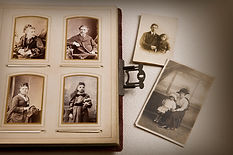
Flip through the Rowam family documents, photos and news clippings.

"ROWAN"
Origin & Meaning of the name "Rowan"
In Scotland and Ireland, the name likely originates from the old Gaelic "O'Ruadhan" meaning a descendent of "Ruadhan" a term that refers to someone with red hair or a ruddy complexion. O'Ruadhan can result in many spellings including Ruan, Roon, Roland and Rowan.
In England, where the name is rarer, Rowan is considered a 'habitation' surname. One possible origin is that it refers the town Rouen in Normandy and was imported to England after the Norman conquest. An alternative name meaning is that it is associated with someone who lived near a Rowan tree.
The Rowan Tree, also called a Mountain Ash, is a lush, bushy tree with small bright red berries common throughout northern Europe. Each red berry has a small pentagram - the symbol of protection - embedded in it at the stem and growing a Rowan tree beside the house supposedly offers protection to the dwelling. The ancient Celts who inhabited Scotland, Ireland and Wales applied symbolism to many plants and trees. They considered the Rowan tree as the "tree of life", for them it symbolised courage, wisdom and protection. In Celtic mythology the goddess Hebe lost her chalice of youth and an eagle fought to retrieve it. Wherever the eagle lost a feather or drop of blood a Rowan tree sprang up. In Norse legend, it was a Rowan tree overhanging a river that saved Thor from being swept away. It was also the tree that the first woman was made from and the 'prescribed wood' for runes.
Geography
The name Rowan is found through the British isles but most common in Scotland and Ireland. In Ireland, it's prominent in Connacht (Co.Mayo) while in Scotland, the Rowan line traces origins to an area that is today part of Glasgow city. The first recording of the name "Rowan" in Scotland is in 1511 when Agnes Rowan was noted as a tenant of the Bishop of Glasgow.
A search of our Rowan family tree places several generations of the Rowan's in the parish of Renfrew. Renfrew parish was an area located on the northern shore of the Clyde river a few miles to the west of Glasgow and is a different location to the town of Renfrew, Scotland. It's more than possible that our Rowan family tree has a connection with the first Rowan, Anges Rowan of Glasgow.
Clans & Tartans
Rowan associated with the Malcolm/MacCullam and McLaughlan clans as their clan badge. The family' origins appear to be as workers for a prominent family. Traditionally Scottish clans were a little like villages or regions, multiple families gathered to form a society in one region and although they may have mixed socially or for trade with others they were aligned with their own. The clans formed under a Chieftan - title that still exists today. The Chieftain was the nominated leader but originally the position was more like a mayor, he was powerful, respected and likely the most skilled militarily or in trade but ultimately he was the peoples representative, rather than a lord or king. Elevating the Chieftan to a position equivalent to a lord and the collective lands becoming his family's alone was an English construct that began around TIME.
Famous Rowans
Lt-Col Sir Charles Rowan (1782-1852) - born northern Ireland to impoverished Scottish landowner, Robert Rowan, he became a military officer who distinguished himself in the Napoleonic wars and went on to be selected by Sir Robert Peel the first joint commissioner of the Met and head of London Met. His brothers James, John and William were all military officers who held high ranking posts overseas. Notably, Sir Charles was promoted in the field rather than purchasing his ranks like many wealthy officers.
Eric Rowan (1909-1993) - South African cricket player was South Africa's opening batsman for 20 years from the 1930s-50s. In 1939 he took the record for the highest test score without hitting a boundary or six and held that for 40 years. He also holds the record for the oldest test cricketer to score a double century.
Lou Rowan (1925-2017) - Australian Test Cricket Match umpire who umpired the very first one day international in Melbourne in 1971 as well as the controversial 1971 Ashes series which pitted him against Englands aggressive fast bowler John Snow. He was known for his no-nonsense approach and went on to become Australia's senior umpire.
Sheila Rowan (living) - is a graduate of Glasgow University where she is currently Professor of Physics and Astronomy and also holds the post of Chief Scientific Advisor to the Scottish Government
John ROWAN
Janet
Born: 1804
Married:
Died:
- Robert
- Charles
- William
- Louisa
- James
- John
John
Like his father, John Rowan was an iron miner who worked for Jordan Hill estate.
The first house to be built on the estate lands of Jordan Hill dates back to Thomas Crawford in 1562. His descendants continued to live in and expand the home until the property was sold in 1750 to tobacco lord, Alexander Houston and then to James Smith in 1800 for £14,000. James Smith married Mary Wilson they had 7 children including their only son Archibald a barrister and mathematician who worked on the navigational compass. Although the property still continued to bring in rental income the coalmines, ironworks and farmlands were a dwindling resource and much of the estate lands were sold off for property development. Archibalds son James Parker Smith, MP for Partick inherited the home in 1913 and sold it to the University of Glasgow
Purchased by the city in 1913 the manor was used as a military hospital during the great war before reverting to its intended purpose of a teachers college in 1921. In 1993 Jordanhill College became the Faculty of Education for the University of Strathclyde.
Today, the manor is a campus for the University of Strathclyde and the former estate is the suburb of Jordan Hill. About 4 miles from Glasgow city centre and close to the fashionable west side suburbs of Hillhead and X, it is popular with young professional families. However, when the Rowan's lived there it was far less pleasant. For most of his life, John Rowan lived in "Red Town", a series of squalid redbrick huts. The single-storey huts consisted of a single room for the entire family, dirt floors and one pit toilet for the street which was a luxury only to be used by the men. Water was scarce, with priority given to the mines, ironworks and farms people had to draw water from the well and often taps were kept under lock and key. John Rowan rose to the level of mine manager and that promotion may have come with better accommodation as the census indicates Janet Rowan moved into the estate caretaker's cottage or gatehouse.
Despite the disparity of living conditions between those who owned the land and those who worked it Janet and John don't seem to have harboured any ill will to their employers as xno of their children have the same names as the X family.
Janet
John & Janet's other children
Mary ?
John ?
Robert ROWAN
Margaret
Born: 12 February 1829
Married: 3 September 1852
Died: 27 November 1884
- Ellen Marion
- John Alfred
- Mary Ann
- James William
- Edward Thomas
- Alexander
- Louisa Jane
Robert
Robert Rowan was born in the Glasgow suburb of Partick?RedTown? in 18??. After marrying Margaret Collins the couple moved to neighbouring Partick. At that time Partick was considered a separate town to Glasgow, despite being only 3 miles from the city centre. Partick was the heart of the Glasgow's industrial revolution. The decline of the Merchant trade which prospered on the West Indies slavery caused Scots to look closer to home. And it was around this time that Scotish engineering was paving an entirely new path for the world. At the centre of this engineering was Glasgow and its former imporatnce as a merchant port city now helped its rise as a shipbuilding city. Partick, on the banks of the river Clyde was an industrial shipbuilding suburb it's many working-class residents living in tenement housing. the industrial revolution brought mass migration and with it housing and sanitation problems. the existing infrustructure couldnt manage. Estates sold off their lands for property development and old hand build cottages were torn down and replaced with mass housing. Not being an impoverished city, Glasgow took the time to architectually design its new urbanised look. Tenement houses may have packed in many of the city's poorest but an attempt was made to make them liveable. Only 3 storeis streets as wide as they wwere tall to maximise sunglight. The industrial revolution brought trains and a subway was built. Long strets of shops flourised as moving goods became easier and the masses were there to buy them. Partick is a good example of the urbanisation of glasgow. The buildings here date to that period. Its busy main street, Drumbarton St, is full of shops on the ground floor of tenement buildings. The subway and train station both run through the suburb. And right there on the corner of M and Drumbarton street, across from the train station aand around the corner from the subway was Robert and Maragret's house. The tenement building still stands.
we dont know why Robert decided to leave Glasgow in the brightest days of the new industrial revolution. Although the glasgow mines were dying, Robert appears to have moved on from that and was working as a salesman. Many people were leaving the UK at this time but because of it's extensive shipbuilding and engineering ventures Glasgow was bucking the trend in work and actuaally aattracting immigrants from other parts of Scotland, the UK and beyond.
Roberts first port of call was Gladstone. The family stayed here for several years before moving south to NSW. Gladstone is a mining port. His brother Archibald - who was married to Margarets sister - also came here. They may have worked in the mining industry or its support services. We know that when Rob
Margaret
As Bridget became a teenager the famine took hold. She entered Ballina Workhouse but was lucky in a sense to be chosen to come to Australia as one of the orphan scheme. Girls were chosen if they were healthy, vaccinated, well behaved. Assigned to Quilan but 10 months in petitioned the court to break her 4 year contract. That was granted and shortly after she married. After her husband died she continued to live in her house in Bowman street until her death in 1915 aged 87.
Robert & Margaret's Other Children
Ellen married x
John married y
Mary Ann married z
James married a
Teddy married Livinia
Alexander died as an infant.
Robert ROWAN
Elizabeth
Born:
Married:
Married:
Died:
- Robert
- Neil
- Alec Edward
- Maise
- Ella
- Myra
From Glasgow to Gladstone
when Alex's mother in law Bridget arrived in Australia in 185? she was assigned to the Irish born Quiglan family in Maitland. The Quiglan's seem to have wanted to help Irish settlers in Australia and it wasn't uncommon for Irish families to take on one of the orphan girls. The Quinlan's later sponsored x Quinlan's brother to come to Australia from Ireland. But things didn't work out with Bridget, she sought to end her indentureship and subsequently left Maitland and married James Rowe, running a pub in Broke where their daughter Louisa was born. At the same time back in Maitland the Watt, Smith and Quiglan families were well known to each other, even attending each other's weddings as witnesses. We don't know if Bridget ever found out her daughter was marrying into friends of the Quiglan family. Alex grew up in Newcastle, not Maitland so might not have had first-hand knowledge.
The Catholic Connection
Marrying an Irish catholic like his grandfather, Alex converted to catholicism. This wasn't a big issue in his family where half the Watt's were Catholic.
Pubs
Louisa and Alex both grew up the children of publicans so taking on that role licensee of the Watt Family Hotel at islington after his parent's death.
Marjorie Elizabeth Rose
Alec Edward Watt
Born:
Married:
Married:
Died:
- Neville John
- Dianne Marcia
Alec wasn't a drinker but he grew up the son and grandson of publicans, a distant descendent of a whiskey empire and met his future wife in her family's hotel.
Childhood - a smart athletic kid
Gifted at mathematics and rugby
A Career in the Railways
If the Watt's weren't holding publican's licences they were working in the railways and Alec chose that path. By the war he was head shunter at Port Waratah / Broadmeadow so was considered a protected job. He was also marginally too old for service in the war, having been marginally too young for service in WWI.
WWII in newastle
What kind of father
Dianne still has her father's cigarette card collection. he was a regular smoker. played dominoes. had a soft affection for Marjorie. On most Saturday's /Sunday's Marji would join her sisters to take the kids to the afternoon pictures. Alec woudl see them off and while they were gone put together the Sunday roast and baked dinner so that when they returned dinner was ready.

